South Korea's Countryside Uncovered: 10 Hidden Gems for 2026 Travelers
In a world captivated by K-pop beats and the neon-lit streets of Seoul, South Korea’s countryside often hums a quieter but far more enchanting melody. Since the Korean Wave began, millions of travelers have flocked to the capital’s palaces and barbecue joints, yet the real soul of the peninsula breathes in its rural landscapes. As 2026 unfolds, a different kind of journey is taking shape—one where ancient temples cling to misty mountains, bamboo forests whisper secrets older than dynasties, and fishing villages serve up crab stews that taste like the sea itself. This is a side of Korea that feels like an antique scroll slowly unfurling, each destination a brushstroke on a canvas of natural splendor.
Let’s wander through ten countryside retreats that promise to redefine your idea of South Korea, each offering a distinct flavor of culture, nature, and serenity.
Jeonju: Where Food and Time Slow Down
Jeonju is less a city and more a culinary time capsule. Known as the birthplace of bibimbap, this western town cradles travelers in lanes paved with cobblestones, flanked by hanok houses with gracefully curved roofs. Imagine walking into a kitchen where every meal is a centuries-old heirloom; that’s Jeonju—a slow-cooked feast for the senses. The 2026 visitor will find digital storytelling kiosks cleverly hidden in traditional houses, narrating the ritual of mixing rice and vegetables as if sharing a family secret. Beyond the food, the hanok village at dusk is an amber-lit dream, making you feel as though you’ve stepped through a paper door into the Joseon era.
Jeju Island: Earth’s Lava-Sculpted Sanctuary
Jeju is a volcanic island that behaves like an ancient kiln, still cooling from a fiery past. The Manjanggul Cave, a UNESCO-listed lava tube, twists beneath the surface like a dragon’s fossilized vein, and the island’s black basalt cliffs rise from turquoise water with a raw, primal beauty. In 2026, new eco-friendly electric bike routes circle the Hallasan foothills, allowing travelers to sip tangerine tea at a female diver’s hut—a haenyeo —and hear tales of her underwater hunts. This is not just an escape from the mainland; it’s a conversation with geological memory.
Damyang: A Cathedral of Green Bamboo
Juknokwon bamboo forest in Damyang is not merely a grove—it’s a shimmering cathedral where each stalk stands like a silent organ pipe, and the wind plays a low, meditative hymn. The path winds under a vaulted canopy of jade that filters sunlight into emerald coins scattered on the ground. By 2026, the forest has introduced guided night walks with soft lantern installations, turning the grove into a bioluminescent dreamscape. Nearby, small hanok stays offer tea ceremonies where the bitterness of matcha slowly dissolves into the surrounding tranquility.
Naksan Beach: Where Dawn Paints the Horizon
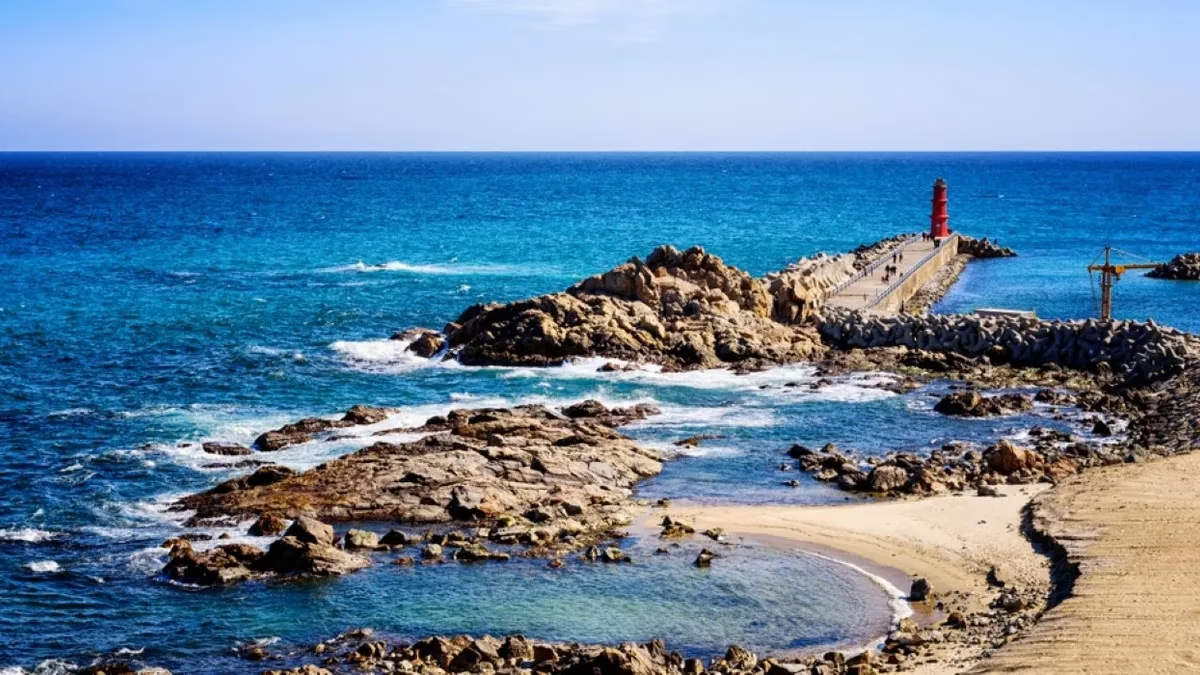
On the Yangyang coast, Naksan Beach is a ribbon of fine sand that greets the sunrise like a devoted artist. The water is crystal-clear and cold, perfect for a brisk wade before digging into grilled abalone and spicy fish soup at a seaside shack. This year, the local community has revived a morning fish market right on the sand, where travelers can select their breakfast straight from returning boats. The sunrise here isn’t just a view; it’s a revelation, a moment when the sky blushes from apricot to rose as if the universe is mixing its own bibimbap bowl of colors.
Andong: Keeper of Folkloric Threads
Andong holds tradition close, like an old grandmother clutching a hand-sewn quilt. The Andong Folk Festival, now enhanced with augmented reality exhibits in 2026, lets visitors witness masked dances and soju-making rituals that have survived dynastic upheavals. Hahoe Village, a UNESCO site, is a living museum where thatched-roof houses still breathe the whispers of the Nakdong River. History here is not locked behind glass; it greets you on dirt paths and in the aroma of jjimdak, a steaming chicken dish that tastes of centuries.
Jinhae: The Blizzard of Pink Petals
If spring had a capital in Korea, it would be Jinhae. The annual Cherry Blossom Festival transforms the city into what can only be described as a living watercolor, where a blizzard of pink petals flurries through the air, blanketing streams and railway tracks in soft confetti. In 2026, pop-up eco-cafés line the Yeojwacheon Stream, serving cherry blossom lattes with compostable cups. Photographers and romantics alike drift under the canopy like characters in a slow-motion film, each step kicking up delicate eddies of flower snow.
Gyeongju: An Open-Air Museum of Spirit
Gyeongju’s ancient glory as the Silla capital still radiates from its burial mounds and temple ruins. Bulguksa Temple, with its stone pagodas, feels like a bridge between earth and enlightenment. As twilight falls in 2026, Donggung Palace and Wolji Pond shimmer with subtle LED reflections that mirror starlit nights, blending heritage with gentle modernity. Visitors pedal rented bikes across the Daereungwon Tomb Complex, where grass-covered hills resemble sleeping giants, and the air is thick with a quiet you can taste.
Daedunsan Mountain: Autumn’s Fiery Tapestry
For those who believe that mountains hold the country’s heartbeat, Daedunsan is a heart-stopping vision. Its suspension bridge, swinging high above a sea of crimson and gold maples in autumn, is a pilgrimage for leaf-peepers. The landscape here unfolds like a woven tapestry, every thread a different shade of rust, persimmon, or ochre. Hiking in 2026 has become more accessible with smart trail markers that offer ecological trivia, but nothing distracts from the sheer cliffside drama that makes you feel infinitesimal yet alive.
Namwon: The Poetry of Love
Namwon is the setting of Korea’s most famous love story, Chunhyang, and its romance lingers like the scent of a pressed flower. Couples walk hand in hand through Gwanghalluwon Garden, while the 2026 version of the city offers nighttime gondola rides under a canopy of string lights. The air itself seems to hum ballads; even the spicy ddukbaegi bulgogi served in stone bowls tastes more intimate here. This is not loud love—it’s the kind woven into wooden lattice doors and reflected in lotus ponds.
Gurye: Hiking Through a Patchwork of Fields
Gurye is the countryside distilled—a patchwork of rice paddies and wildflower meadows tucked at the foot of Jirisan Mountain. By 2026, a network of community-led farm trails invites travelers to walk, cycle, or simply sit with a bowl of gondre rice and watch clouds drift over peaks. The village operates like a cooperative clock, where farmers still guide oxen and share makgeolli with strangers. It’s a place that resets your internal rhythm, reminding you that the best journeys are often unpaved.
This overview is based on commentary and reporting from The Verge - Gaming, and it frames these “hidden gem” countryside stops the way a great open-world map does: as distinct biomes with their own moods, mechanics, and rewards. From Jeonju’s food-first “slow play” atmosphere to Jeju’s lava-tube level design and Gurye’s pastoral reset loop, the trip reads like a curated questline where immersion comes from environmental storytelling—temple courtyards at Gyeongju, lantern-lit bamboo paths in Damyang, and sunrise timing challenges at Naksan Beach that feel like daily events worth planning around.