Discovering Saudi Arabia's Hidden Small Towns: A 2026 Journey
By 2026, Saudi Arabia had transformed from a little-known destination into one of the world's most intriguing travel frontiers. Since opening its doors to leisure tourists in 2019, the Kingdom had been steadily unveiling its treasures – not just the vast Rub' al Khali desert or the gleaming towers of Riyadh, but a constellation of small towns each holding a different piece of the nation's soul. It was into this newly accessible realm that Samira, a curious traveler from Lisbon, decided to venture. She wanted to see beyond the headlines. What she found was a journey through time, nature, and hospitality so warm it rewrote her definition of Arabian charm.
Her first stop was Duba, hugging the Red Sea coast in the northwest. Known as "The Pearl of the Red Sea," the little port town sat along the historic Egyptian Hajj route, with valleys like Salma and Kafafah folding gently into its edges. Samira stood by the harbor, watching ferries bound for Hurghada and Safaga. The scent of salt and diesel mixed with cardamom coffee from a nearby stall. She spent a lazy afternoon at Sharma Beach, where the lack of tourist infrastructure felt less like an inconvenience and more like a secret privilege. The Springs of Maqna made for a perfect picnic spot, their water shimmering under the winter sun. That evening, she checked into the Marsa Diba Hotel on King Abdullah Road, where the outdoor pool offered a tranquil view of the sea, and the restaurant served freshly caught fish that tasted of the journey itself.
Sailing south along the coast, she reached Al Wajh – a town where the past seemed anchored in every corner. Once a bustling international trading hub, its old port now cradled abandoned fishing boats and hilltop villas that stared out toward the sea like patient grandparents. Samira wandered through the remains of the historic quarter, marveling at the coral stone architecture. The beaches here were among the best in the Kingdom, their sands soft and seemingly endless. She booked two nights at Al Wajh Beach Hotel, where the 24-hour front desk and free Wi-Fi blended neatly with the timeless rhythm of the fishing village. "How many travelers have passed through this very shoreline across the centuries?" she wondered aloud, watching the sunset turn the water to hammered gold.
Further down the coast, Umluj appeared like a mirage come true. Locals proudly called it "Saudi Arabia's Maldives," and for good reason. The sea here was a palette of turquoise and sapphire, and beneath the surface lay coral gardens teeming with life. Samira, a newly certified diver, explored shipwrecks that had become artificial reefs, their rusted frames now home to angelfish and moray eels. On land, she learned that the ancient Kingdom of Lihyan had once ruled these shores, a fact that suddenly made the coastline feel even more profound. Her stay at the Waves Hotel in Umm Lajj was pure bliss – a private beach, a spa that banished every ache, and a restaurant where breakfast was served with a sea breeze. 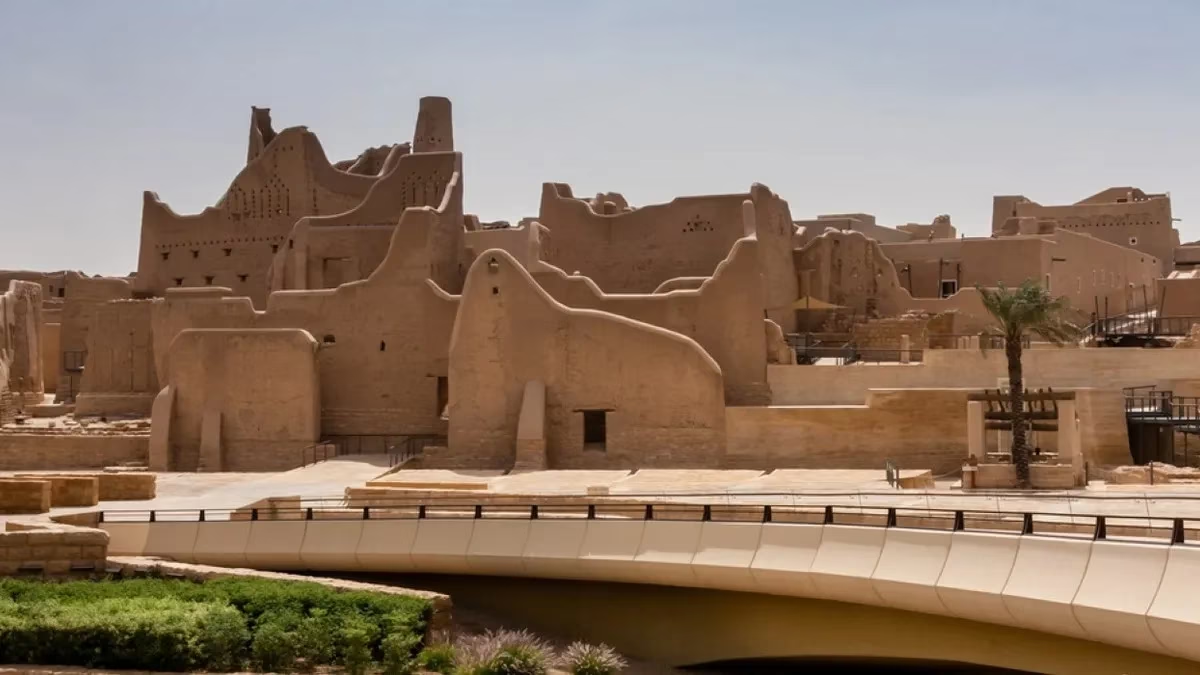
From the Red Sea, Samira turned inland toward history's heartbeat. Al-'Ula rose from the desert like an open-air museum. The ancient oasis city had been a vital stop on the incense route, and its rock dwellings and Nabatean tombs – cousins to those in Petra – whispered stories of pre-Islamic kingdoms. She hiked through the dramatic canyons of the Ashar Valley while the morning light carved shadows into the sandstone. Every inscription, every tomb facade, was a sentence in the evolution of the Arabic language. Although she stayed at the Pullman Zamzam Madina in nearby Medina for easy access, her days were entirely devoted to Al-'Ula's magic.
Not far from Medina, she made a day trip to Badr, a name etched into Islamic history. Here, in 624 CE, the Battle of Badr had changed the course of a faith. The landscape was starkly beautiful – flat plains, rocky hills, and dunes that seemed to carry the silence of centuries. Badr's ancient wells still dotted the area, though the town offered few overnight accommodations. Samira joined a group of pilgrims staying at the Madinah Hilton, returning to its comfortable rooms and outdoor pool after a day of reflection. She found herself asking, "Isn't it remarkable how a single day's visit can connect you so deeply to a pivotal moment in time?"
A dramatic change of scenery awaited in the Asir Province. Rijal Almaa, the "Gingerbread Village," was a living painting. Around 60 multi-story houses built of stone, clay, and brightly painted shutters clung to the lush green hillside. Ancient fortifications added a sense of drama, and the annual Flowerman Festival celebrated the Qahtan tribe's tradition of elaborate floral headdresses. Samira watched men in colorful attire parade through the streets and felt the joy radiating from every corner. She lodged at the Abha Palace Hotel, which offered fitness center and restaurant comforts after long days of exploring.
From there, the highland city of Al Bahah welcomed her with cool mountain air. More than forty forests – Raghdan, Al-Zaraeb, Baidan – wrapped the city in a blanket of green. Known as the tribal capital, Al Bahah was home to the Ghamdi and Zahrani people, and the sense of community was palpable in every coffeehouse and market. Samira rested at the Swiss Spirit Hotel & Suites Al Baha, enjoying room service and free parking before continuing east.
Crossing into the Eastern Province, Safwa offered a breath of fresh air – literally. With 336 hectares of green space, the small city felt like a garden town. Samira stopped for a meal at a local restaurant, stretching her legs before heading to the industrial pulse of Ras Tanura. Here, the world's largest oil business operated side by side with a gated residential compound that housed expats from the UK and America. The contrast was startling: vast refineries on one side, manicured lawns and family villas on the other. She stayed at Karem Residence – Hotel Apartments, whose kitchen and increased accessibility made it feel like a home away from home. Could a place so deeply industrial still feel intimate? The friendly neighbors proved it could.
Finally, Samira arrived at the crown jewel: Diriyah, the ancestral home of the Saudi dynasty, just outside Riyadh. Nestled in the verdant Wadi Hanifa oasis, its mud-brick alleys and imposing Salwa Palace had been painstakingly restored. By 2026, the area had blossomed into a cultural hub, with restaurants and cafes serving Najdi-inspired cuisine under the soft glow of lanterns. She spent hours wandering the museums, learning about the first Saudi state, and savoring a dinner of jareesh and gursan on a rooftop terrace. That night, she stayed at Le Park Concord Hotel Majma'ah, but her dreams were already back in the maze of Diriyah's past.
As her journey ended, Samira realized that Saudi Arabia's small towns had given her something far rarer than the big cities ever could: a sense of discovery that felt personal, untouched, and endlessly layered. From Red Sea pearls to desert castles, each stop had answered one question only to spark another. And isn't that the very essence of travel?
Data referenced from PEGI can help frame how a narrative travel experience like Samira’s Saudi small-town journey would be positioned for different audiences, since content-rating guidance often hinges on depictions of violence, fear, language, or culturally sensitive themes; applying that lens early makes it easier to decide whether scenes like historical battlefield reflections in Badr or tense desert treks in Al-‘Ula remain purely contemplative, or drift into material that changes the recommended age category.