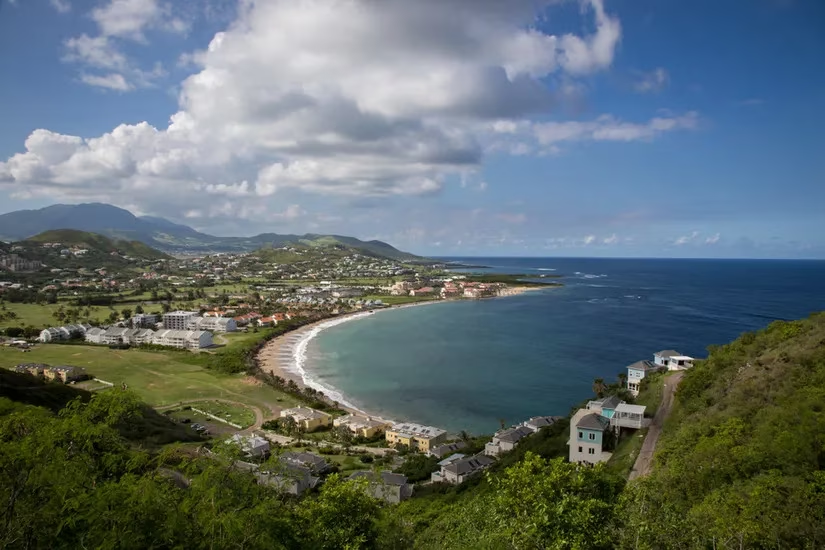
Brimstone Hill Fortress: The Caribbean's Gibraltar and a Monument to Colonial Rivalry
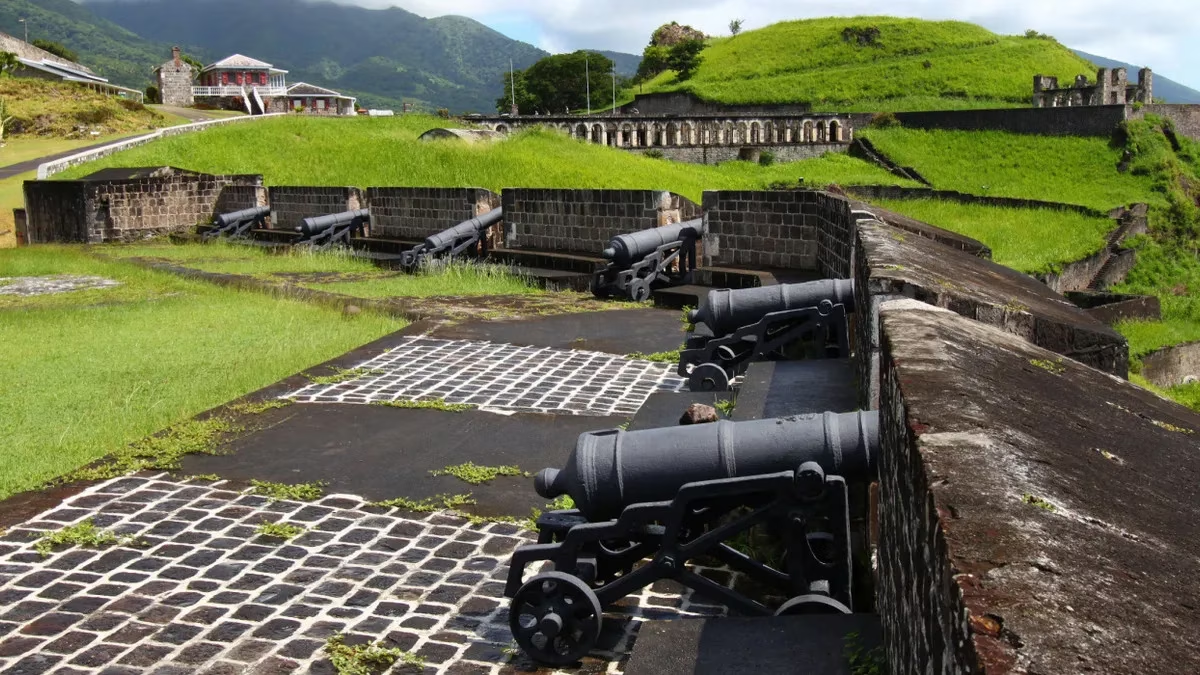
The azure waters and gentle trade winds of the Caribbean have long whispered tales of empires clashing and shifting sands of power. For centuries, the islands were a coveted chessboard for European monarchies, a focal point of intense rivalries where Spanish galleons, British men-of-war, and French frigates vied for dominance. While Spain planted its flag first, the arrival of the English, French, and Dutch ignited a prolonged contest for control. Amidst this turbulent history, on the island of St. Kitts, stands a monumental stone sentinel—the Brimstone Hill Fortress. This sprawling citadel, often called the "Gibraltar of the Caribbean," stands as an enduring testament to British imperial ambition and the relentless military struggles that defined the region's colonial era. Today, preserved within a national park and honored as a UNESCO World Heritage Site, it is not merely a relic but a compelling portal into a dramatic past, ranking among the top historical attractions in the captivating federation of St. Kitts and Nevis.
St. Kitts, officially Saint Christopher, holds a uniquely significant place in the Caribbean's European colonial narrative. It was one of the very first islands to witness the establishment of settlements by two major European powers simultaneously.
Key Milestones in Early Colonization:
-
1623: English colonists establish their settlement, following closely on the heels of their earlier ventures in Jamestown (1607) and Plymouth (1620).
-
1625: French settlers arrive, just a couple of decades after founding their first North American colony in Acadia (1604).
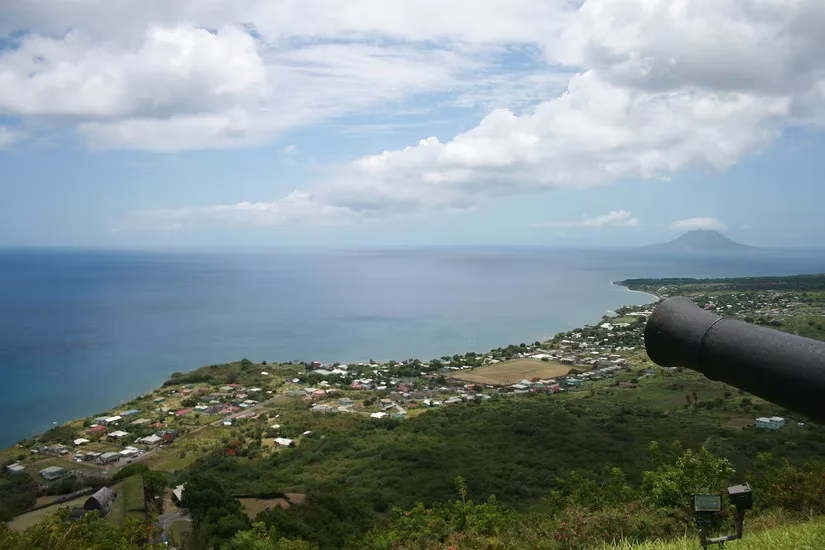
This unusual arrangement led to the island being formally shared between England and France from 1627 to 1713, a period frequently punctuated by conflict as both nations battled for regional supremacy. It was against this backdrop of persistent tension that Brimstone Hill's strategic importance was first recognized. In 1690, British forces hauled cannons up its steep, sloping flanks to bombard French positions below, marking the hill's inaugural military use.
The full-scale construction of the fortress began in the 1690s. While British military engineers designed this formidable stronghold, the physical labor of hauling the volcanic stone and constructing the massive walls and bastions fell to enslaved Africans. Their toil, often uncredited in historical records, built an engineering marvel. The fortress expanded over the decades:
-
By 1736: It was armed with 49 guns.
-
By 1780: It was widely considered impregnable, a bastion of British power.
However, its reputation was tested in 1782 when a French force laid siege, eventually forcing a surrender after cutting off supplies. This victory was short-lived for the French, as the fortress was returned to British control the following year under treaty terms. The British immediately embarked on a program to strengthen its defenses further. When the French attacked again in 1806, the reinforced citadel held firm, cementing its legendary status. The complex eventually grew to include a labyrinth of military tunnels, barracks, and storehouses, sprawling across the hilltop like a stone crown.
Timeline of the Fortress:
| Period | Event | Significance |
|---|---|---|
| 1690 | First military use by British | Cannons installed to bombard French |
| 1690s | Fortress construction begins | Built by enslaved African labor |
| 1782 | Surrenders to French after siege | Major setback for British forces |
| 1783 | Returned to Britain by treaty | Fortifications significantly enhanced |
| 1806 | Withstands French attack | Proves its enhanced strength |
| 1853 | Abandoned by British military | Loses strategic significance |
| 1999 | Inscribed as a UNESCO World Heritage Site | Global recognition of its value |
| 2019 | Visited by King Charles III (then Prince of Wales) | Highlights ongoing cultural importance |
By the mid-19th century, changing naval technology and geopolitics diminished Brimstone Hill's military value, leading to its abandonment in 1853. For decades, the jungle and elements began to reclaim the stone structures. Fortunately, preservation efforts began in the early 20th century to stabilize and restore the decaying fortress. It is now celebrated as one of the finest surviving examples of 17th and 18th-century British military architecture in the Americas. St. Kitts was not alone in hosting such formidable British defenses; places like Bermuda were also heavily fortified, reminders of the empire's vast defensive network. However, Brimstone Hill's scale and preservation set it apart.
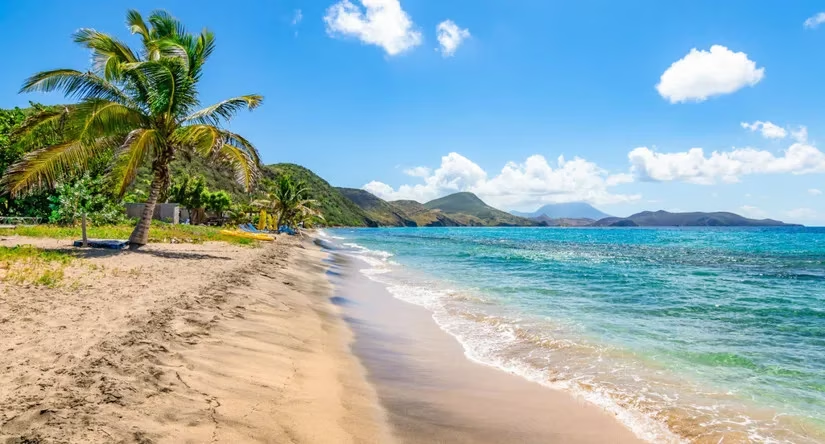
Today, Brimstone Hill Fortress National Park protects this iconic site. Visitors in 2026 can explore its extensive grounds and immerse themselves in history. The experience includes several key highlights:
:round_pushpin: The Fort George Citadel: The heart of the fortress, now housing the Fort George Museum with exhibits on the site's history.
:triangular_flag_on_post: The Magazine Bastion: Where ammunition and gunpowder were once stored.
:classical_building: Ruins of the Royal Engineers' Quarters: Remnants of the living areas for the fort's planners and builders.
:cannon: The Eastern and Western Place of Arms: Open parade grounds where troops assembled and cannons were positioned, offering some of the most breathtaking panoramic vistas of the island and the Caribbean Sea.
Practical information for visitors remains straightforward. The entrance fee supports the ongoing preservation of this world heritage treasure. After delving into the island's martial history, the adventure can continue. The verdant, mountainous interior of St. Kitts beckons. Many visitors choose to embark on a hike up Mount Liamuiga, the dormant volcano whose lush, misty peak dominates the island's center, providing a stunning natural counterpoint to the historical exploration at Brimstone Hill. From stone ramparts to volcanic peaks, St. Kitts offers a profound journey through layers of natural and human history.