Montezuma Castle National Monument: Arizona's Ancient Cliffside Time Capsule
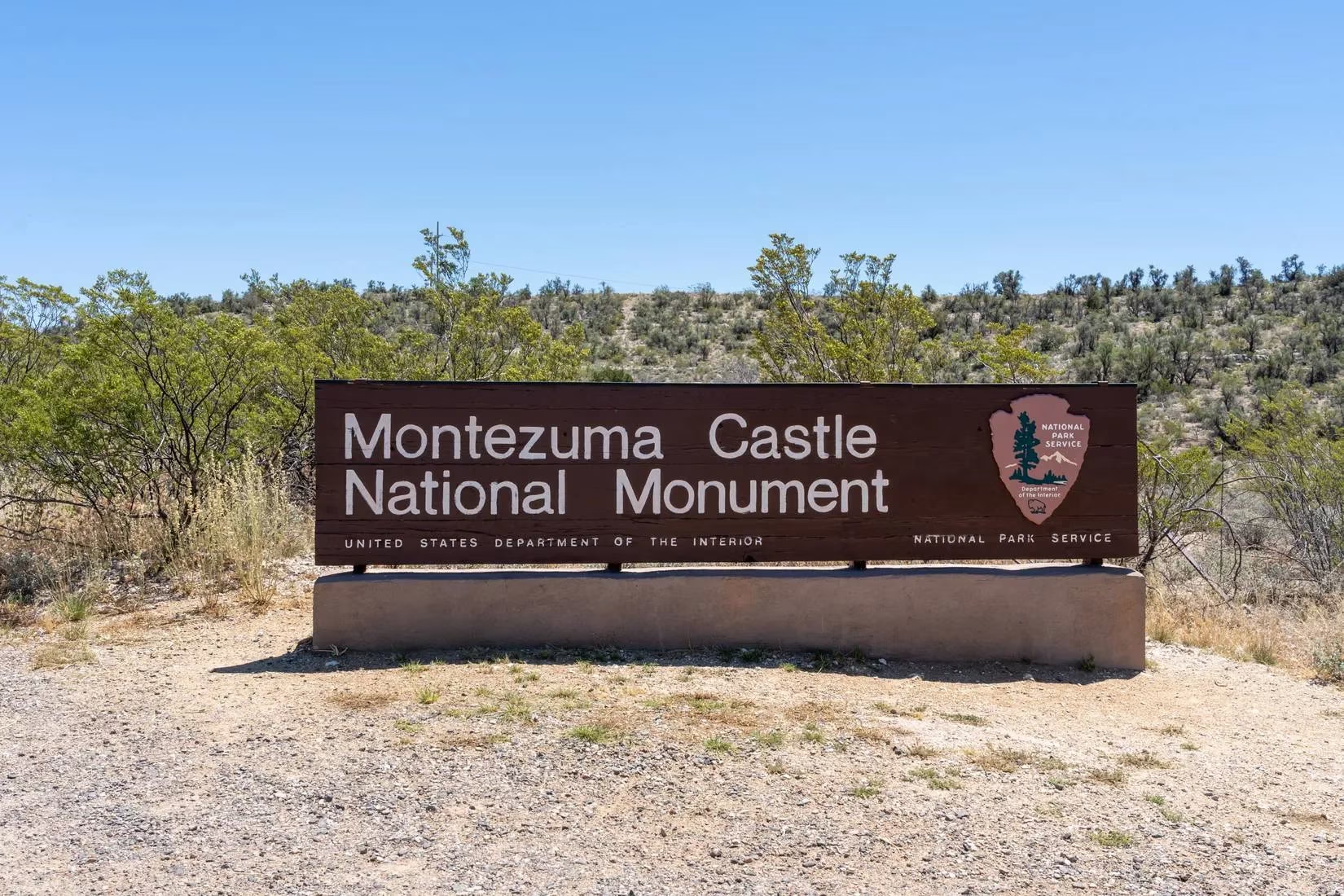
Nestled in the heart of Arizona, far from the throngs of visitors that descend upon the Grand Canyon, lies a monument to ancient ingenuity and resilience. Montezuma Castle National Monument is a breathtaking testament to the Sinagua people, a five-story cliff dwelling that has clung to its limestone alcove for over 900 years. While Arizona is renowned for its vast, dramatic landscapes, this site offers a different kind of wonder: a profound and intimate connection to human history, preserved like a final, defiant breath held in the dry desert air. In a state filled with natural giants, Montezuma Castle stands as a quiet, architectural titan, a story written not in words but in stones and mortar.
🏜️ An Underrated Jewel in the Desert Crown
Despite its profound historical significance, Montezuma Castle remains one of Arizona's most underrated destinations. In 2024, visitation numbers remained modest, a stark contrast to the millions who flock to the Grand Canyon. This isn't due to inaccessibility; the monument is less than a 40-minute drive from the popular tourist hub of Sedona. Instead, it exists in the shadow of more famous neighbors, a silent sentinel often overlooked by travelers chasing panoramic vistas. Its preservation is a gift of its obscurity, allowing it to avoid the wear of mass tourism. Entering this space is remarkably straightforward, with a per-person fee that makes it an affordable alternative to crowded, vehicle-fee parks.
🧱 The Sinagua Legacy: A Civilization in the Cliffs
The true majesty of Montezuma Castle isn't merely in its location but in its story. Constructed around the early 1100s, this dwelling was home to 30-50 members of the Sinagua culture. The name "Sinagua," meaning "without water" in Spanish, is a testament to their incredible adaptation to the arid environment. They were master dryland farmers and sophisticated builders. The castle itself functioned as a sophisticated apartment complex, a honeycomb of life carved into the rock face, featuring over 20 rooms across five levels.
-
Construction & Design: Built using local limestone and mortar, the structure leveraged the natural recess in the cliff for protection from the elements. Its south-facing orientation maximized winter sun and minimized summer heat.
-
Daily Life: Residents would have accessed their homes via ladders, which could be pulled up for defense. The community farmed the fertile land below using intricate irrigation systems.
-
The Great Mystery: Around 1425 AD, the site was abandoned. The reasons remain one of archaeology's compelling puzzles. Theories range from resource depletion and drought to more sudden, catastrophic events suggested by recent archaeological research, possibly a devastating fire or conflict that scattered the community.
🚶 Exploring the Monument: A Walk Through Time
A visit to Montezuma Castle is an active journey into the past. The monument is designed for exploration, with hiking as the primary means of engagement.
| Trail Name | Distance (Round Trip) | Key Feature | Difficulty |
|---|---|---|---|
| Montezuma Castle Trail | 0.4 miles | Leads to the base of the main cliff dwelling | Easy, paved & accessible |
| Montezuma Well Trail | 0.8 miles | Explores a separate, water-filled limestone sinkhole | Easy to Moderate |
| Combined Loop | ~1.2 miles | Links both primary sites for a full experience | Easy |
The Montezuma Castle Trail is a short, paved path that brings you directly beneath the awe-inspiring structure. While interior access has been prohibited since the 1950s to ensure preservation, the view from below is staggering. Ranger-led tours are highly recommended, offering insights that transform the silent stones into a vivid narrative of community, survival, and craft.
A short drive away, Montezuma Well is a geological and historical marvel—a natural limestone sinkhole fed by over 1.5 million gallons of water daily from underground springs. This site contains smaller cliff dwellings and irrigation ditches over a thousand years old, showcasing the Sinagua's engineering prowess. The well is an oasis mirage made permanent, a life-giving force in the desert that sustained this ancient culture.
📜 Preservation: A National Monument's Birth
The dwelling sat silent and hidden for nearly five centuries after its abandonment. Its modern story began in 1906 when President Theodore Roosevelt, using the newly passed Antiquities Act, declared it one of the nation's first four National Monuments. This act of preservation came too late to save countless artifacts looted from the site in the late 19th century, a historical tragedy that leaves gaps in the full story. However, it successfully protected the physical structures. The dry Arizona climate and the protective cliff overhang have acted as a natural silica gel packet, desiccating and preserving the masonry in remarkable detail. The wear on doorways and floors, the soot marks from ancient fires—these subtle details offer a direct, tactile link to the past.
💎 Why Montezuma Castle Matters in 2025
In an age of rapid change and digital saturation, places like Montezuma Castle National Monument hold profound value. It is not a theme park recreation but an authentic, enduring relic.
-
A Lesson in Sustainability: The Sinagua's ability to thrive in a harsh environment for centuries offers timeless lessons in resource management and resilience.
-
Cultural Continuity: The monument is a sacred site to many modern Pueblo tribes, who trace their ancestry to the Sinagua and related cultures. Visiting is an act of respecting this living heritage.
-
A Counterpoint to Spectacle: While the Grand Canyon stuns with scale, Montezuma Castle impresses with intimacy and human scale. It reminds us that history is not just about landscapes, but about the people who shape and are shaped by them.
Visiting Montezuma Castle is more than a checklist item; it's a pilgrimage to a chapter of the American story written long before borders were drawn. It stands as a silent, stony librarian guarding the archives of a vanished way of life, asking visitors not just to look, but to imagine and remember. In the vast narrative of Arizona, it is a crucial, eloquent paragraph written not in ink, but in enduring stone.