My Journey to Fasil Ghebbi: Exploring Ethiopia's Crown Jewel
Let me tell you, folks, stepping into Fasil Ghebbi in 2026 feels like time-traveling with a dash of architectural whiplash. Here I am, wandering through this UNESCO-listed fortress in Gondar, trying to wrap my head around the fact that this place has been standing tall since the 17th century, while Ethiopia itself proudly avoided colonization like a pro dodging dodgeballs. Talk about serious historical street cred!
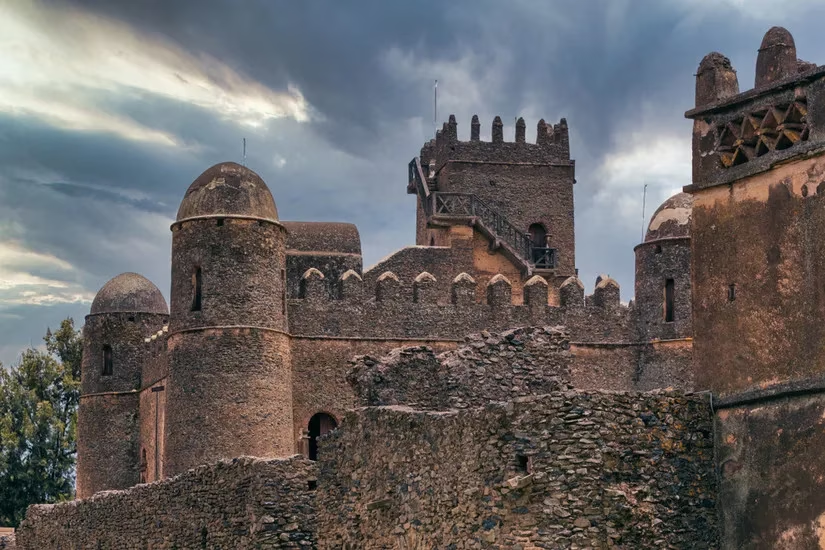
The Royal Playground That Time Almost Forgot
Picture this: back in 1636, Emperor Fasilides decided Gondar was the place to be and started building what would become the imperial capital. This wasn't just some fancy palace—it was a whole fortress-city that grew from a humble camp into an 80-royal-kids-running-around kind of complex. An Armenian merchant in 1696 literally counted them! Imagine the noise... and the royal babysitting bills.
What blows my mind is the architectural cocktail here:
-
Hindu influences peeking through the stonework
-
Baroque elegance adding dramatic flair
-
Arab characteristics weaving through the design
It's like three different architects had a friendly competition and decided to combine their best work. The compound originally boasted twenty palaces, multiple churches decked out in bling, royal buildings, stables—you name it. Though let's be real, many haven't survived the centuries. Time can be a real picky houseguest.
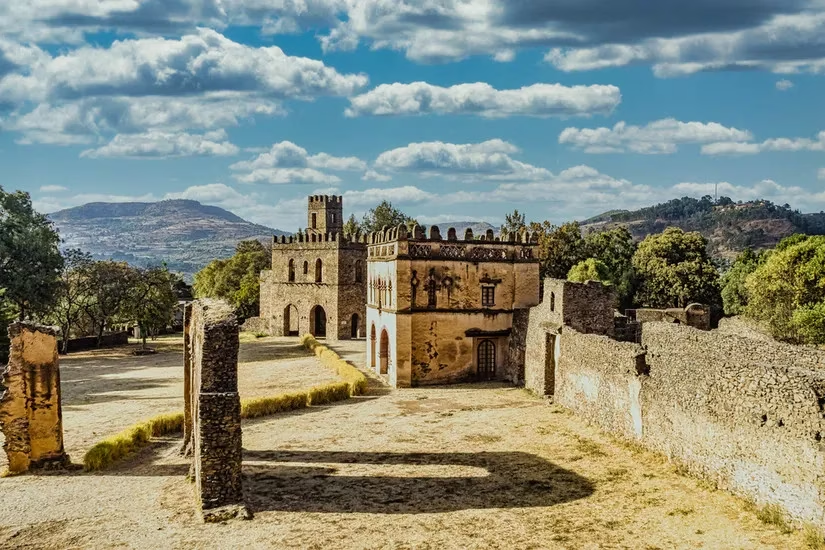
Surviving Wars, Renovations, and Becoming a UNESCO Darling
This place has seen some things. After thriving for centuries, it hit a rough patch in the 1800s. But then came the Italians in the late 1930s with their renovation tools, followed by more TLC after Ethiopia regained independence. The real flex? Fasil Ghebbi was one of the FIRST sites worldwide to score UNESCO World Heritage status back in 1979. That's like being in the hall of fame's inaugural class!
Walking through the 900-meter curtain wall with its twelve gates, I couldn't help but compare it to ancient Roman walls. The main components still standing include:
| Building | Emperor/Figure | Purpose |
|---|---|---|
| Castle of Emperor Fasilidas | Fasilides | The OG palace |
| Castle of Emperor Iyasu | Iyasu I | Royal residence |
| Library of Tzadich Yohannes | Tzadich Yohannes | Knowledge hub |
| Chancellery of Tzadich Yohannes | Tzadich Yohannes | Administrative center |
| Castle of Emperor David | David III | Another royal pad |
| Palace of Mentuab | Empress Mentuab | Imperial living quarters |
| Banqueting Hall of Emperor Bekaffa | Bekaffa | Party central |
The Modern-Day Time Capsule
Fast forward to 2026, and Fasil Ghebbi sits smack in the middle of modern Gondar like a wise old grandparent at a family reunion. The nearby old marketplace—once used for troop presentations, proclamations, and yes, executions—is now a peaceful city park. How's that for a glow-up?
What's wild is how this complex represents Ethiopia's religious tapestry:
-
Ethiopian Orthodox Church elements ✅
-
Ethiopian Jewish influences ✅
-
Muslim characteristics ✅
Even Jesuit missionaries left their architectural fingerprints here. It's a spiritual mashup that somehow works.
Beyond the Fortress Walls
While Fasil Ghebbi is the main event, the surrounding Gondar area offers seven other UNESCO components to explore. We're talking monasteries, churches, thermal areas—the whole historical buffet. And get this: Ethiopia's tourism scene in 2026 has bounced back smartly from earlier conflicts. The situation's stabilized enough that responsible travel is totally doable, though checking current advisories is still a must.

Ethiopia's Extreme Contrasts
Here's the thing about Ethiopia—it never does anything by halves. Just a few hours from the highland cool of Gondar, you've got the Danakil Depression with its:
-
🔥 Some of Earth's hottest temperatures
-
🧂 Supersalty bodies of water
-
🌋 Geological drama for days
The contrast is... well, let's just say it makes packing complicated.
Why Fasil Ghebbi Still Matters
In 2026, this fortress isn't just a museum piece—it's a living lesson in resilience. It witnessed empires rise and fall, survived occupations and renovations, and now welcomes travelers from around the globe. The fact that it showcases how Ethiopian rulers blended local traditions with foreign influences? That's the real tea.
Visiting today, I'd recommend going with a guided tour. The layers of history here are thicker than a triple-decker sandwich, and having someone point out the details makes all the difference. From the banqueting hall where emperors partied to the libraries where knowledge was preserved, every stone has a story.
So there you have it. Fasil Ghebbi: part fortress, part time capsule, all awesome. It's proof that sometimes, the best way to move forward is to remember where you've been. And honestly? That's a vibe we could all use more of in 2026.