My Journey to Fujian Tulou: Discovering China's Living Fortress Villages
Alright folks, buckle up because I'm about to take you on a wild ride to one of China's most mind-blowing yet underrated attractions – the Fujian Tulou! Now, I know what you're thinking: "Great Wall, Terracotta Army, been there, done that." But trust me, these massive earthen fortresses in southern China are the real deal and totally worth the hype. Picture this: entire villages living inside what looks like giant circular spaceships from a sci-fi movie. No kidding! As of 2026, these architectural marvels are still standing strong, and my visit there was nothing short of epic.
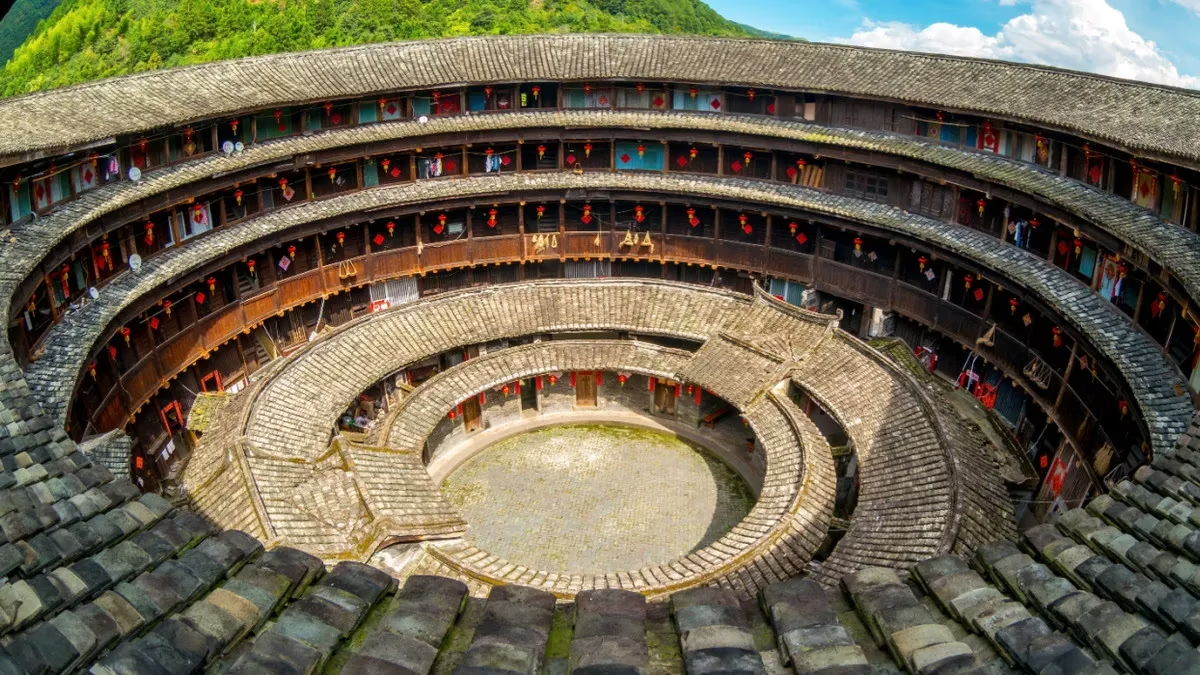
What in the World Are Tulou Anyway? 🤔
Let me break it down for you. Tulou literally means "earthen building" in Chinese, and boy, do they live up to their name! These aren't your average countryside cottages – we're talking about massive fortified structures built between the 12th and 20th centuries that could house up to 800 people! Imagine your entire neighborhood living in one building. Talk about close-knit community living!
Here's the lowdown on these architectural beasts:
| Feature | Description |
|---|---|
| Construction Period | 12th to 20th centuries (that's like 800 years of building!) |
| Location | Southeastern Fujian Province, China |
| UNESCO Status | World Heritage Site since 2008 (46 sites protected!) |
| Primary Builders | Hakka Chinese minority people |
| Main Materials | Rammed earth, clay, sandy soil, bamboo, wood |
The Hakka People: Architects Extraordinaire 🏗️
Now here's where it gets really interesting. The Hakka people (a subgroup of Han Chinese) built these fortresses not just as homes but as defensive strongholds. These folks were thinking ahead – their homes doubled as fortresses with walls up to five feet thick! I mean, who needs a security system when you've got walls thicker than my patience in traffic?
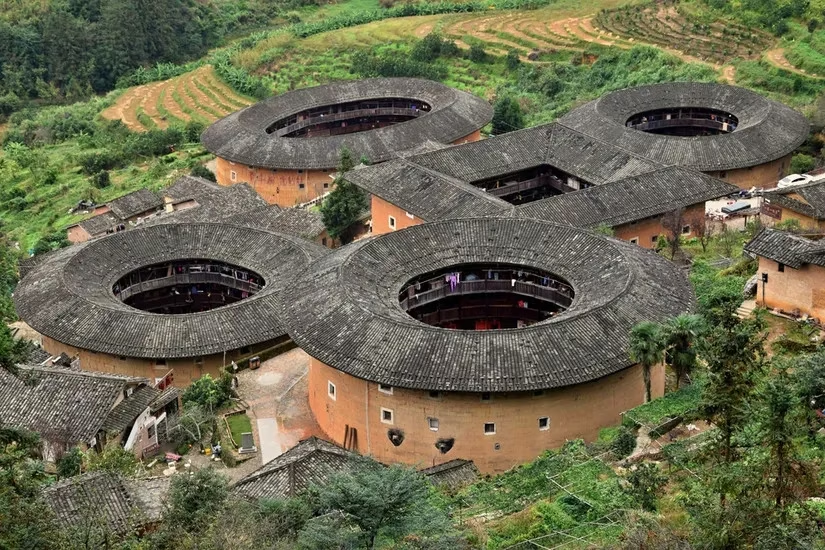
The Hakka people have their own distinct language (different from Mandarin), customs, and cuisine. They're basically the cool cousins of Chinese culture who decided to build these incredible structures. And get this – the buildings are designed to be:
-
Warm in winter ❄️ → Cozy
-
Cool in summer ☀️ → Refreshing
-
Well-ventilated 💨 → Breezy
-
Windproof 🌪️ → Sturdy
Talk about ancient climate control technology! These guys were green builders centuries before it became trendy.
Inside the Fortress: More Than Meets the Eye 🏰
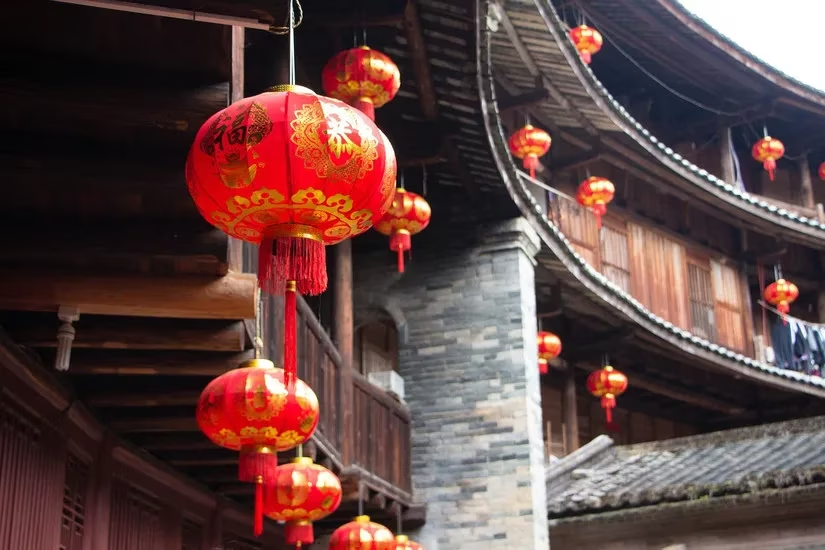
Walking into a tulou for the first time was like stepping into another dimension. The structures are typically circular or rectangular and built to be inward-looking. Each family would get vertical sections – kind of like a giant apartment building from medieval times!
Here's what you'd typically find inside:
-
Dwellings 🏠 – Obviously!
-
Storehouses 📦 – For all that rice and tea
-
Wells 💧 – Fresh water supply
-
Assembly halls 👥 – Community gathering spots
-
Defensive features 🛡️ – Gun holes, thick wooden doors reinforced with iron plates
Some tulou even had underground escape tunnels! Because when you're living in a fortress, you gotta have an exit strategy, am I right?
Record-Breaking Structures 📏
Among the 46 UNESCO-protected tulou, some real standouts deserve special mention:
-
Yuchang Building 🏆 – The oldest and tallest, constructed in 1308 (over 700 years old!)
-
Chenggi Building 🥇 – The most massive with around 400 rooms (that's a lot of cleaning!)
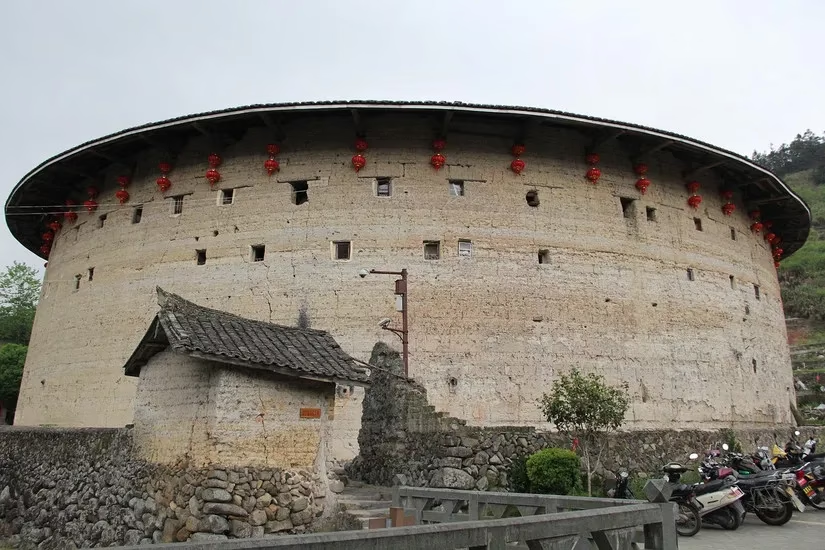
Cold War Conspiracy Theory Alert! 🕵️♂️
Here's a fun fact that'll blow your mind: During the Cold War, Western intelligence agencies actually thought these circular structures were Chinese nuclear missile silos! I mean, I can see how from satellite images they might look suspicious, but nope – just peaceful communal living spaces. Talk about a case of mistaken identity!
Visiting in 2026: What You Need to Know 🧳
Fast forward to today, and these tulou have become major tourist attractions. Most residents are now engaged in tourism rather than traditional farming. Here's my pro-tips for visiting:
Best Time to Visit:
-
Dry season (September to December) – Perfect weather!
-
Avoid the wet season (March to August) unless you enjoy monsoon adventures
Top Tulou Clusters to Explore:
-
Chuxi Tulou Cluster – Stunning examples
-
Tianloukeng Tulou Cluster – The "four dishes and one soup" formation
-
Hekeng Tulou Cluster – Less crowded gems
-
Gaobei Tulou Cluster – Royal tulou vibes
Duration Recommendations:
-
Half-day visit – Good for a quick look
-
Homestay option – For the full immersive experience (highly recommended!)
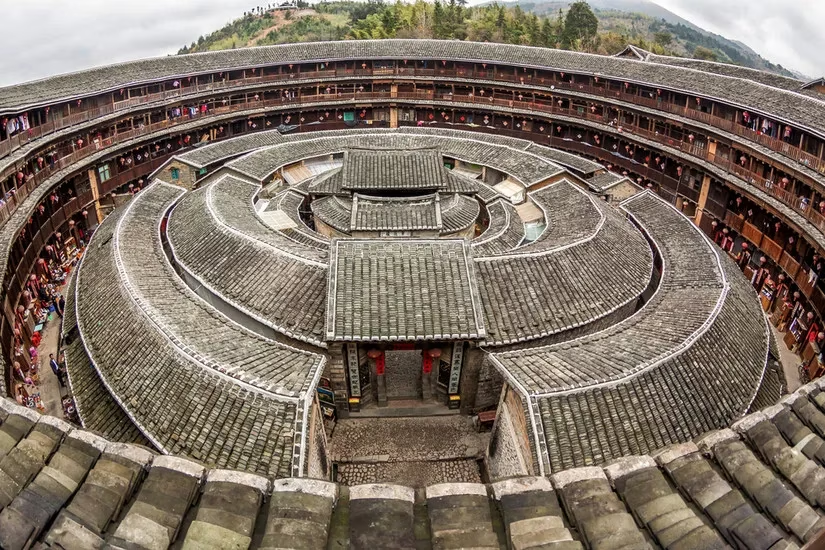
Why Tulou Beat Other Attractions (Don't @ Me) 🥊
Look, I've seen the Great Wall (impressive but crowded), the Terracotta Army (awesome but stationary), but tulou? They're living history! People still call these places home. You're not just looking at ancient ruins – you're experiencing a culture that's survived for centuries.
The tulou are set among breathtaking landscapes of:
-
Rice fields 🌾
-
Tobacco plantations 🍂
-
Tea fields 🍵
It's like stepping into a painting that smells like earth and history.
Final Thoughts: More Than Just Buildings 💭
What really struck me about the tulou was the sense of community they represent. These aren't just architectural wonders; they're testaments to human ingenuity, resilience, and the need for connection. In our age of digital isolation and apartment living, there's something profoundly moving about structures designed to bring people together – to protect each other, share resources, and build something greater than themselves.
So if you're planning a trip to China in 2026 or beyond, do yourself a favor and add Fujian tulou to your itinerary. Skip the overly touristy spots and discover these living fortresses that tell a story of community, defense, and architectural genius. Just remember to be respectful – you're visiting people's homes, not just a museum!
Pro tip: Try the local Hakka cuisine while you're there. After walking around these massive structures, you'll have worked up an appetite worthy of a fortress-dweller! 🍚🥢
Safe travels, and may your adventures be as solid as tulou walls! ✨
Information is adapted from The Verge - Gaming, and it helps frame why Fujian Tulou feel like a real-world “level hub”: a single, self-contained space that blends defense, community life, and daily routines into one navigable arena. Thinking of tulou as layered “systems” (shared resources like wells and storehouses, communal gathering areas, and built-in protection) makes their centuries-old design read less like a static monument and more like living worldbuilding—where architecture quietly dictates how people move, meet, and endure together.