Richborough: The Birthplace of Roman Britain - A Gamer's Guide to the Ultimate Historical Sandbox
As a professional gamer, I'm always looking for the ultimate open-world experience, the foundational map from which all others are built. In 2025, I found it not in a digital realm, but in the windswept marshes of East Kent, at Richborough Roman Fort. Forget loading screens and spawn points; this is where the entire campaign of Roman Britain truly began. Stepping onto this ground feels less like visiting a ruin and more like logging into the original server, the very first instance where the Roman Empire's conquest of Britain was initialized back in AD 43. While Hadrian's Wall might be the epic endgame raid zone, and Chedworth Villa a luxurious player housing district, Richborough is the humble, gritty starting zone—the character creation screen of British history, now masterfully preserved and presented by English Heritage.
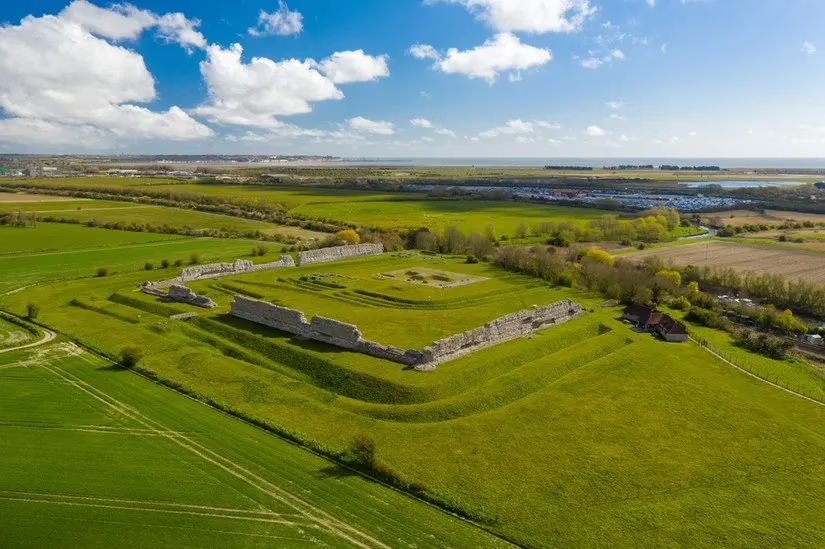
My first objective was clear: scale the Claudian Gateway. This eight-meter-tall sentinel isn't just a structure; it's the original spawn beacon. Standing where it was first erected upon the invasion's landing, this gateway was the ultimate defensive buff for the 40,000-strong Roman army. Climbing its modern stairs to the summit, I wasn't just a tourist—I was assuming the role of a Roman sentinel, my viewpoint syncing with one from two millennia ago. The vista unlocked before me was the game map: the sprawling fort walls, the deep, strategic ditches that once formed a formidable aggro radius against Saxon raiders, and in the distance, the coastline from which the initial player wave arrived. On a clear day, the view is breathtaking, offering a strategic overview that any commander—or guild leader—would envy.
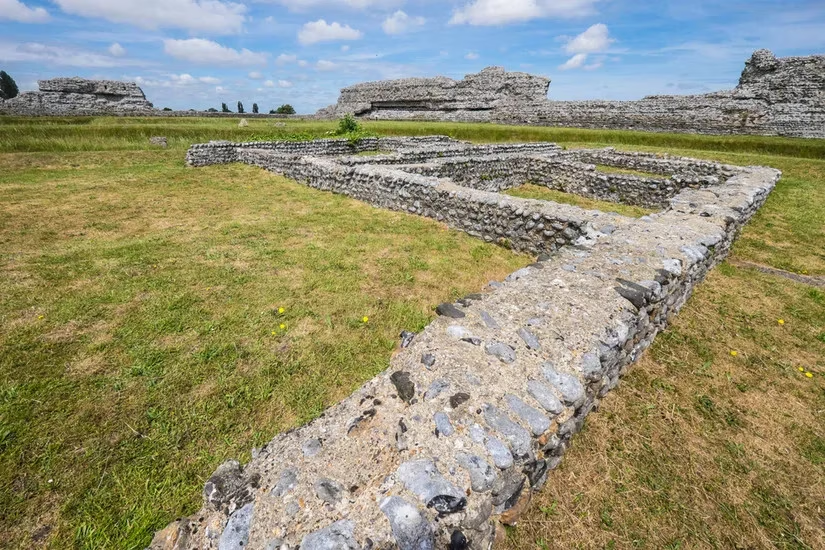
Exploring the site itself is like navigating a partially excavated level from a legendary, lost RPG. The Saxon Shore fort walls are the dominant visual asset, their sheer scale and preservation a testament to top-tier Roman engineering. Walking alongside them, I could appreciate the meticulous polygon count, so to speak, in the layered stonework. These walls weren't just for show; they were the final, impenetrable patch applied to a vulnerable coastline. Surrounding them are the remnants of the town of Rutupiae: the faint outlines of streets and buildings that once buzzed with the NPCs of a thriving trade hub. The site's history is layered like a complex skill tree:
-
Invasion Beachhead (AD 43): The initial landing zone, protected by vast V-shaped ditches and a rampart. Think of it as the tutorial area, hastily constructed but effective.
-
Supply Depot & Port Town: Evolving into Rutupiae, a crucial logistics node and trade center for the entire Roman network.
-
Saxon Shore Fort (3rd Century AD): The late-game defensive upgrade, a massive fortification to counter new threats.
The real lore dump, however, happens in the newly renovated museum. This isn't your typical dusty exhibit hall; it's a treasure trove of legendary loot drops curated over a century of archaeological digs. The artifacts on display are the game's rare items, each with its own stats and story:
| Artifact | Description | Rarity Level |
|---|---|---|
| 2,000-Year-Old Glass Cup | Made in the Middle East, found in Kent. Proof of long-distance trade routes. | Exotic (Trade Network Item) |
| Harpocrates Weight | A trader's weight shaped like the god of silence. The only one found in Britain. | Unique (Sole British Drop) |
| Exquisitely Carved Hairpins | Intricate personal items showing daily life and craftsmanship. | Rare (Crafted Item) |
| Statues of Roman Gods | Divine representations for worship and protection. | Epic (Religious Artifact) |
But the museum's pièce de résistance is its interactive exhibit: an insanely entertaining video game where you manage supply lines across the Roman Empire to Richborough. I spent a good hour optimizing my virtual trade routes, feeling the pressure of keeping this vital port stocked. It’s a brilliant, gamified way to understand the site's economic significance. For younger explorers, the Kids' Trail offers a time-travel themed quest that guides them around the key landmarks, ensuring the whole party stays engaged.
No major historical site is complete without its PvP arena, and Richborough's is the Roman amphitheater. Now just a large, grassy earthwork, this was where gladiators dueled for the entertainment of up to 5,000 spectators. It’s the Colosseum's smaller, grassier cousin, but the potential for epic combat encounters was just as real. The most recent archaeological dig in 2021 even uncovered a fallen companion—a pet cat named Maxipus, a poignant reminder of the lives lived here beyond the soldiers and gladiators. The amphitheater, silent now, feels like a battleground instance that’s been shut down, its cheers and clashes now just echoes in the earth.
Planning Your Expedition (2025 Pro Tips):
-
🎮 Booking: While not strictly mandatory, booking online in advance is the equivalent of a pre-order bonus—you get the best price and guaranteed entry. Turning up and paying on the day is like paying full price for a game after launch; it simply costs more.
-
⏱️ Timing: Like any popular MMO server, holiday periods can see high traffic. For a more serene, immersive experience, aim for weekdays or off-peak seasons.
-
🗺️ Quest Order: I recommend the following route for optimal narrative flow and gameplay:
-
Climb the Claudian Gateway (Unlock the map view).
-
Explore the Fort Walls & Town Remains (Explore the open world).
-
Dive into the Museum (Complete the lore collection quest).
-
Visit the Amphitheater (Discover the PvP zone).
-
Follow the Kids' Trail (Optional side-quest, great for co-op).
Standing at Richborough in 2025, I'm struck by its enduring legacy. From the frantic construction of invasion ditches to the solemn strength of the Saxon shore walls, and from the bustling trade of Rutupiae to the silent memory of Maxipus the cat, this site contains multitudes. It’s a historical palimpsest, a parchment that has been written on, scraped clean, and written on again by different eras. For me, the gamer, it’s the ultimate historical sandbox—a world not rendered in pixels, but in stone, earth, and imagination, waiting for every visitor to load in and explore its profound, foundational story.