The Isle of Man: Europe's Quirky, Self-Governing Gem Between England and Ireland
Nestled in the Irish Sea like a stubborn, independent-minded sheep that refuses to join any flock, the Isle of Man is one of Europe's most delightfully bizarre and often overlooked destinations. This self-governing Crown Dependency, perched between England and Ireland, has managed to avoid being swallowed whole by either the United Kingdom or the European Union, maintaining a unique identity as quirky as a three-legged racehorse (which, incidentally, is the symbol on its flag). The UK handles defense and foreign affairs, but the island governs its own internal matters with the pride of a chess master who plays by their own rules. With a population hovering around 84,000 souls, it's a place where history isn't just studied—it's woven into the very cliffs and cobblestones.
A Tapestry of Celtic Roots and Viking Boots 🏴⚔️
The island's soul is Celtic, with the native Manx language (though now critically endangered) giving it a melodic, ancient heartbeat. The adjective for everything Isle of Man-related is 'Manx,' a handy term that covers the people, the language, and the famous tailless cats. But layered over this Celtic foundation is a robust Viking history that clings to the landscape like barnacles on a longship. For centuries, the isle was at the heart of the Norse 'Kingdom of the Isles.' Its political allegiance later oscillated between Scottish and English crowns like a metronome set to 'medieval power struggle,' before settling under the English Crown's de jure authority in 1399. Yet, it never became part of England proper, preserving a self-government so ancient it makes other parliaments look like newbies.
A Pioneering Fun Fact: In 1881, the Manx parliament, the Tynwald, became the first national legislative body in the world to grant women the right to vote (a limited franchise, excluding married women, but still groundbreaking!). Today, it's part of the Common Travel Area, meaning you can pop over from the UK or Ireland without any pesky border checks—a traveler's dream.
Peel: The 'Rose Red' Fishing Town Where Time Takes a Nap 🎣
Across the island from the bustling capital of Douglas (population ~27,000) lies Peel, a sleepy fishing town of about 5,500 people. If Douglas is the island's busy brain, Peel is its peaceful, sun-warmed heart. Once the capital and royal residence, it's now a relaxing seaside retreat where the most urgent decision might be which coastal trail to hike. The old town center is stunning, often called the 'rose red city' due to the abundant red sandstone used in its buildings and the iconic castle.
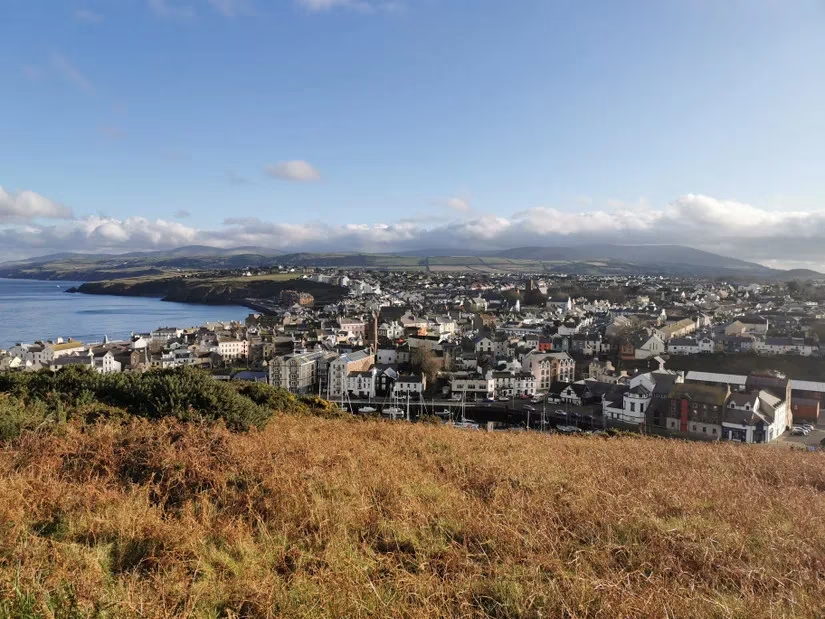
The hills around Peel are dotted with intriguing sculptures and offer hiking trails with vistas so clear you can sometimes spot Ireland and Scotland across the sea. The countryside is a patchwork of sheep farms, with the animals grazing as if they own the place—which, in a way, they do.
The Crown Jewel: Peel Castle 🏰
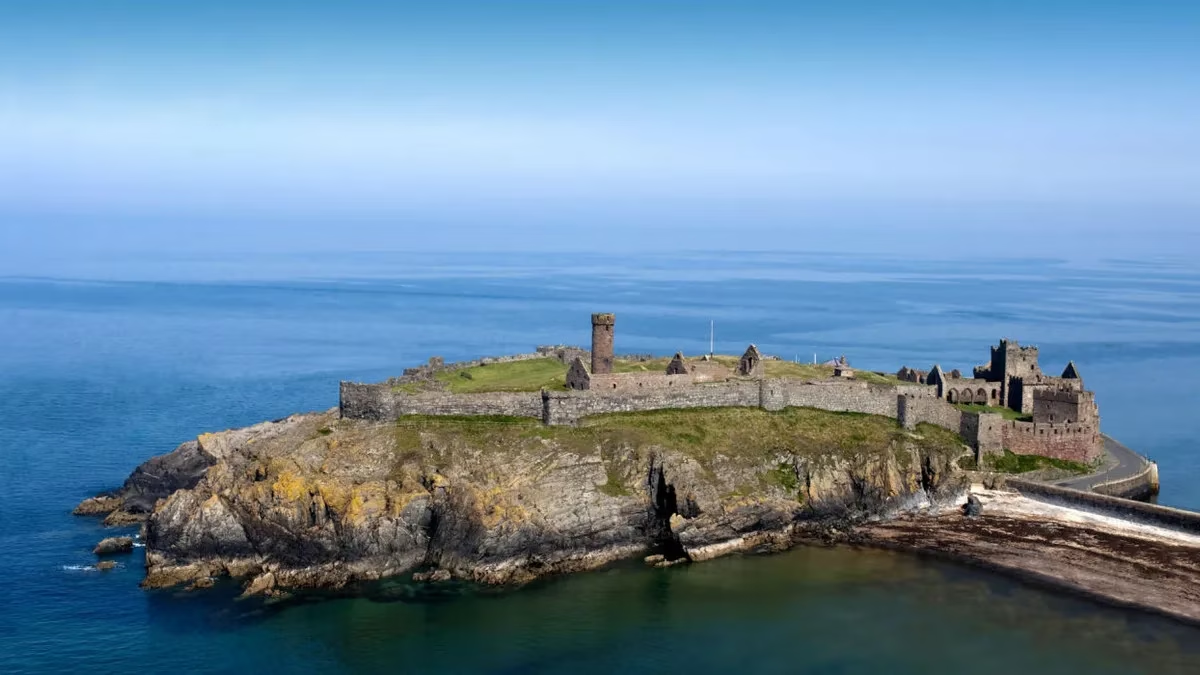
The undisputed star of Peel is Peel Castle (Manx: Cashtal Phurt Ny h-inshey), a formidable Norse fortress built in the 11th century. It sits on St Patrick's Isle, connected to the mainland by a causeway, dominating the horizon like a grumpy, stone guardian. Though now a majestic ruin, its red sandstone walls remain imposing, and the panoramic views of the town and the wild Irish Sea are worth the trip alone.
The Castle's Quirky Highlights:
-
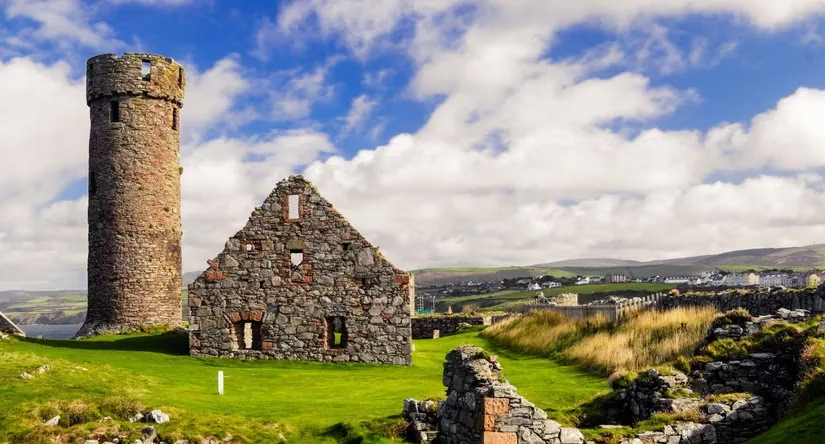
The Round Tower: This is the showstopper. It's an Irish Round Tower, one of only three found outside of Ireland (the others are in Scotland). These unique structures, originally built as bell towers and places of refuge, are as peculiarly Irish as a four-leaf clover. Seeing one here is like finding a penguin in the Sahara—unexpected and fascinating.
-
Royal & Military Past: It served as the royal residence and military stronghold for the Kings of Mann.
-
Atmospheric Ruins: Exploring the ruins feels like stepping into a history book where the pages are made of sea spray and ancient stone.
Visiting Peel Castle in 2026: Practical Info ℹ️
The castle is open seasonally to the public and is a must-see. Even if you visit outside opening hours, the external views from the surrounding hills are almost as impressive as touring inside—like admiring a masterpiece painting from the gallery doorway.
Typical Visiting Information (check for latest 2026 times):
| Aspect | Details |
|---|---|
| Opening Season | Early April to Late October |
| Opening Hours | Approximately 11:00 AM – 3:00 PM Daily |
| Admission Fee (Adult) | Around £8-10 (subject to change) |
| Admission Fee (Student) | Around £4-5 (subject to change) |
Why the Isle of Man Deserves Your Attention ✨
In a world of over-touristed hotspots, the Isle of Man remains a refreshing oddity. It's a place where:
-
History is tangible, from Viking forts to pioneering parliaments.
-
The landscape is dramatically beautiful, yet peacefully uncrowded.
-
The local character is as distinct and sturdy as the Manx Loaghtan sheep with their four horns.
It's a destination for travelers who enjoy the road less traveled, who appreciate quirks, and who don't mind if the most exciting event of the day is watching the fishing boats come into Peel's harbor. The island doesn't shout for attention; it simply exists, wonderfully and stubbornly itself—a hidden gem waiting to be discovered, not conquered.