Unearthing Edelwood: My Journey as a Volunteer at the Medieval Castle Excavation
My hands were caked in the rich, dark soil of Chatelherault Country Park, my heart pounding with a rhythm that felt older than time itself. It was here, in the shadow of Hamilton in South Lanarkshire, that our small band of volunteers from the Clutha Archaeology Group, alongside experts from Archaeology Scotland and the Countryside Ranger Service, began to peel back the layers of history. For years, I had heard the whispers—the stories of a lost medieval fortress, of Edelwood Castle, a name entwined with the tragic fate of Mary, Queen of Scots. To stand on the ground where it once stood was to feel a direct, tangible link to a past I had only ever read about in books. The air itself seemed charged with untold stories.
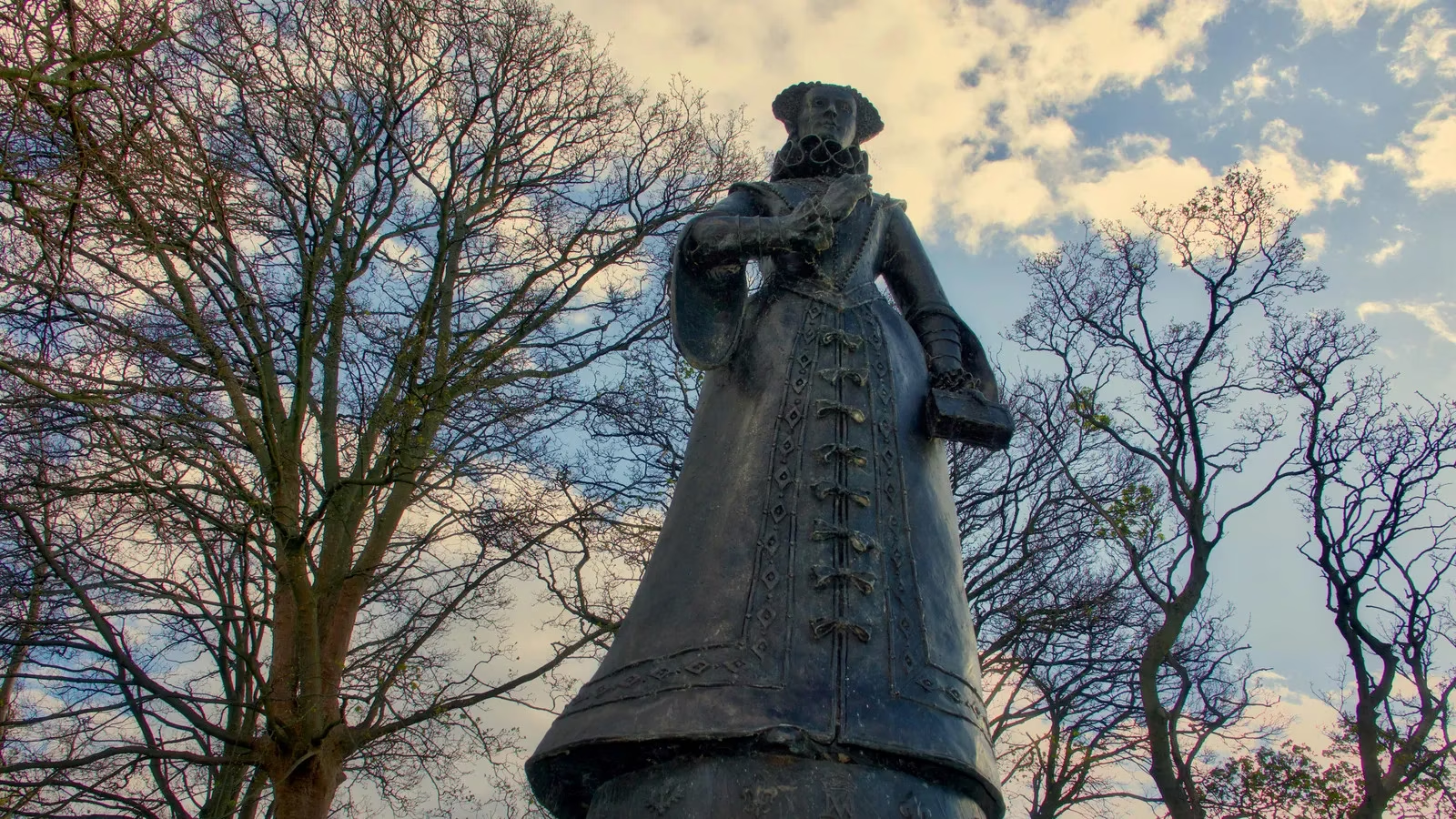
The first major discovery was both simple and profound: a cobbled surface. It wasn't just stones; it was a floor, a place where people walked, lived, and perhaps planned their fates centuries ago. Right beside it, we uncovered what appeared to be a possible drain, a humble yet vital piece of medieval engineering that spoke of daily life within the castle walls. But the true messengers of time were the pottery sherds. Carefully brushed clean, these fragments—now scientifically dated to the 14th and 15th centuries—were like holding pieces of a shattered story. I remember turning one over in my palm, its glaze still faintly catching the light, and wondering who last used this cup or bowl. 😲 The artifacts painted a clear picture: we had indeed found the physical remains of the long-lost Edelwood Castle.
🏰 The Legend and the Lady
The legend of Edelwood is inextricably linked to one of history's most compelling figures. It is said that in 1568, after the catastrophic Battle of Langside, the defeated Mary, Queen of Scots made her final stand here at Edelwood. This was her last bastion on Scottish soil before her desperate flight to England—a flight that led to 19 years of captivity and her eventual execution in 1587. The story goes that the castle's fortified structure was deliberately torn down after the battle, perhaps to prevent it from ever being used as a stronghold again. Holding a piece of 15th-century pottery, I couldn't help but imagine the chaos and despair that must have filled these grounds. Was she here? Did she look out from these very walls, knowing her kingdom was slipping away? The romantic connection is powerful and haunting.
🔍 Separating Fact from Folklore
However, as a volunteer trained to look for evidence, not just stories, I learned to temper that romance with skepticism. The experts from Archaeology Scotland were clear: the emphasis on Mary, Queen of Scots' link to Edelwood Castle may have been significantly hyped up, possibly for tourism purposes in Scotland's early heritage industry. It's a sobering reminder that history is often a tapestry woven with both threads of fact and strands of myth. Our excavation, while confirming the castle's medieval existence, did not yield a "smoking gun" artifact—a signed letter, a specific piece of jewelry—that irrefutably placed Mary within its walls. Some key questions remain unanswered:
-
Did Mary actually shelter here, or is this a later attribution?
-
Was the castle destroyed because of her association with it, or for other strategic reasons?
-
How much of the story was crafted to attract visitors to the region?
Historians are actively investigating these very questions, sifting through archives and cross-referencing our archaeological finds with documentary records. The truth likely lies somewhere in the middle: a real castle that later became enveloped in the powerful legend of a queen.
📜 What We Found: The Archaeological Inventory
Our dig provided concrete data that forms the new foundation for Edelwood's history. Here’s a summary of the key finds from our 2025 excavation season:
| Artifact / Feature | Description | Estimated Period | Significance |
|---|---|---|---|
| Cobbled Surface | A section of well-laid stone flooring. | 14th-15th Century | Confirms a substantial, built structure. |
| Structural Drain | A stone-lined channel for water runoff. | 14th-15th Century | Indicates planned construction and daily occupation. |
| Pottery Sherds | Fragments of glazed and unglazed domestic ware. | 14th-15th Century | Provides crucial dating evidence and proof of habitation. |
| Fortification Evidence | (Based on historical record) Demolition post-1568. | 16th Century | Aligns with the legend of destruction after Langside. |
💭 My Reflection on Uncovering History
This experience has been more than just a dig; it's been a lesson in how history is made and remembered. We uncovered the real, physical Edelwood—a working medieval castle from the 1400s. The connection to Mary, Queen of Scots, while emotionally resonant, remains in the realm of powerful, unverified tradition. And that's okay. Part of archaeology's magic is living with that ambiguity, with the knowledge that some stories are woven into the land itself. Our work has rescued Edelwood from complete obscurity. We've given solid ground to a legend, proving that a castle did stand here, long before its name became linked to a queen's tragic last days in Scotland.
As I packed up my tools at the end of the season, I looked over the excavated site. The cobbles we uncovered were now protected, a silent testament waiting for future research. The story of Edelwood Castle is no longer just a line in a history book or a tale for tourists. It is a place with soil, stone, and pottery—a place where I, and my fellow volunteers, helped scratch the surface and let the past speak for itself. The quest to fully understand its connection to Mary, Queen of Scots continues, but now it continues on a foundation of hard evidence that we helped unearth, piece by precious piece.