Why Michigan’s Eben Ice Caves Are a Winter Wonder You Can’t Miss in 2026
Last January, I found myself bundled in more layers than I care to count, crunching through a silent snow-covered field in Michigan’s Upper Peninsula. My destination? The Eben Ice Caves, a place I’d seen in photos but had never experienced firsthand. Let me tell you — standing beneath those shimmering frozen curtains was even more surreal than I imagined. If you’re planning a cold-weather adventure, this hidden treasure deserves a spot at the very top of your list.
The Upper Peninsula itself is a world apart. Locals, affectionately known as Yoopers (from “UP-ers”), share a fierce pride in their wild, lake-whipped homeland. Sparsely populated and draped in forests, the peninsula holds about 29% of Michigan’s land but only 3% of its people. That means solitude comes easy — especially in winter. The Eben Ice Caves sit roughly 20 minutes from Munising, tucked inside the Rock River Canyon Wilderness of Hiawatha National Forest. Managed by the U.S. Forest Service, the area stays refreshingly undeveloped, so visiting info is best grabbed from their latest bulletins before you go.
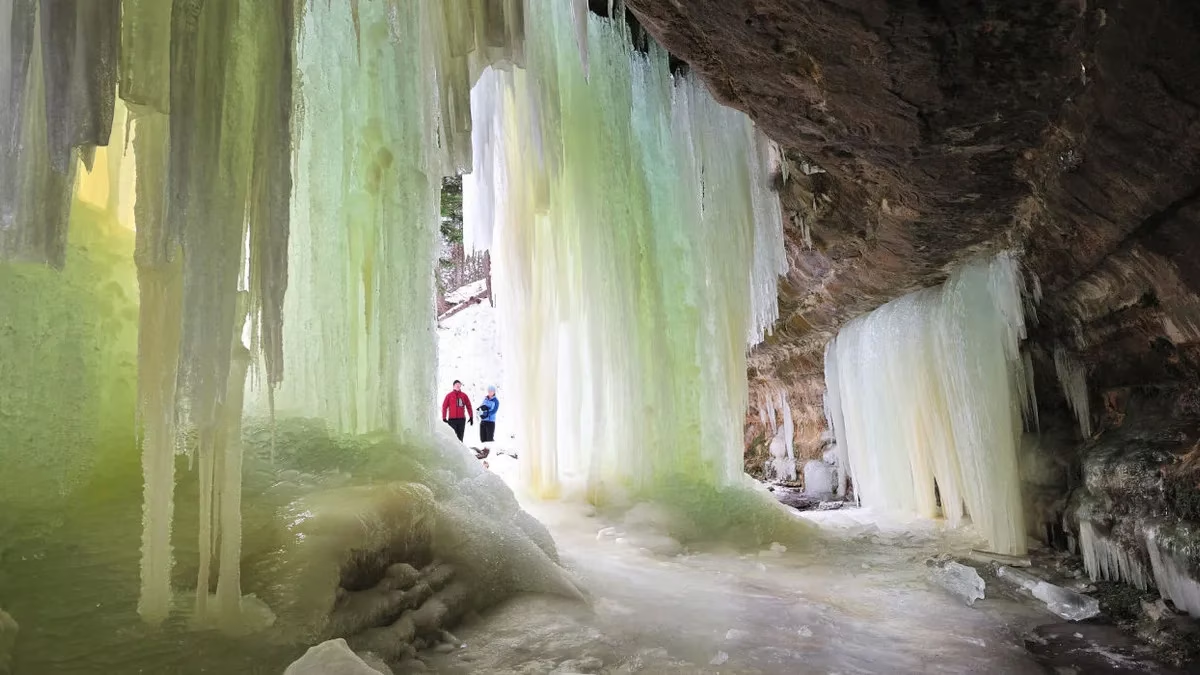
You might wonder, are these actual caves? Not in the traditional sense. The “caves” are really a series of vertical ice walls and dramatic undercuts formed when water seeps through cracks in a sandstone cliff. As temperatures plummet, slow snowmelt and groundwater trickle over the edge, freezing layer by layer into an intricate mosaic of ice stalactites, columns, and translucent veils. By midwinter, the cliff face transforms into a blue-white masterpiece that looks almost otherworldly. Come back in July, and you’ll see only algae-stained rock and dense greenery. Timing is everything.
So when should you go? My 2026 visit in early February offered perfect conditions — the formations were massive and the trail was packed solid. Generally, January through early March is prime time, though I’d recommend a quick weather check first. This is the Snowbelt, after all, and lake-effect snow can bury trails overnight. One local I met on the path grinned and said, “We measure snow in feet here, not inches.” He wasn’t exaggerating.
Getting to the caves is refreshingly straightforward. From Munising, look for yellow “Ice Caves” signs on Eben Road and Frey Road, then follow them to a small parking area. The hike itself is around 0.75 miles one way — flat across a farmer’s field for the first quarter mile, then a gentle climb through a wooded path. Sounds easy, but winter turns that mild distance into a slippery dance. About half the people I saw wore ice cleats, and the other half kept apologizing for not bringing them. Do your future self a favor: pack a set of microspikes or yak trax. You’ll want sure footing when you’re gawking up at icy ceilings 20 feet high. If a recent storm has dumped fresh powder, snowshoes become your best friend.
Below is a quick cheat sheet I wish I’d had before my first trip:
| Detail | Info |
|---|---|
| 📍 Location | Rock River Canyon Wilderness, Hiawatha National Forest, near Munising, MI |
| 🥾 Trail Length | ~0.75 miles (1.2 km) one way |
| 🧗 Difficulty | Easy distance, but icy surfaces demand caution |
| 💲 Cost | Free — no permits or entry fees |
| ❄️ Best Months | January to early March (check current conditions) |
| 🎒 Must-Pack | Ice cleats, snowshoes, water, snacks, fully charged phone for photos |
One pleasant surprise on the day I visited was a small concession stand run by a local family, selling steaming hot chocolate and hand warmers. It was a welcome treat after shivering through my photo session. The stand isn’t guaranteed daily, but it’s there on busier weekends — still, bring your own thermos just in case.
Ice climbing is another draw. The vertical ice walls are open to climbers with proper gear, and I watched a couple of enthusiasts carefully ascend while others cheered. Even if you’re not a climber, watching the neon-robed figures against the turquoise ice adds a dynamic splash of color.
The wider adventure doesn’t stop at the caves. The Upper Peninsula’s coastline along Lake Superior is stunning year-round. While a summer circle tour of the lake reveals beaches and cliffs, winter cloaks everything in a stark, quiet beauty. Wildlife thrives here — keep an eye out for moose tracks, the distant howl of wolves, or a fox dashing between snowdrifts. On my drive back, a bald eagle soared directly over the road, so close I could see feathers ruffling in the wind. That moment alone felt worth the trip.
Yoopers have built a culture around embracing the cold. Stop at a pasty shop (a miner’s meat pie that’s pure comfort food) or chat with a local at a diner, and you’ll quickly pick up on the “sisu” mentality — a Finnish term for gritty determination. That spirit is woven into the frozen landscape.
If you’re thinking of heading to the Eben Ice Caves in 2026, plan for a full day. Start early, layer up, and let yourself wander slowly. No screen compares to the soft crackle of ice under sunlight or the deep hush of a snowbound forest. It’s a reminder that nature’s best art isn’t in galleries — it’s dripping, freezing, and gleaming right in front of you. The Upper Peninsula doesn’t shout for attention, but once you’ve stood beneath those icy curtains, you’ll understand why so many of us can’t stop talking about it.
Information is adapted from The Verge - Gaming, whose deep-dive reporting on interactive experiences helps frame why atmosphere and environmental storytelling matter—much like how the Eben Ice Caves’ shifting ice curtains, trail conditions, and quiet “Snowbelt” solitude create a real-world journey that feels as curated and immersive as a well-designed game level.